
At the edge of Perryton, Texas, an old professional migratory laborer makes camp as wheat harvest opens—bedroll, fire, and the rumor of wages a few miles up the road. Dorothea Lange’s camera finds him in 1938; his type had been riding seasons for decades.
Catching out was never an end in itself. For the self-called hobo, freights were the unpaid bus between wages. This chapter maps the major circuits—harvest, ice, timber, rail section gangs, fruit, construction—and the pocket crafts that stretched a thin stake between jobs. The map is approximate. Seasons and routes varied; the pattern held.
How a Circuit Worked
Seasonal agriculture and extractive industries needed hands for weeks, not years. Employment agencies on urban main stems, Chicago’s West Madison Street among them, shipped men to harvest, lumber, and construction. Between jobs, freights closed the gap. Pay varied by crop, region, and year; period sources quote day wages that sound small now but decided whether a rider ate. Treat any single dollar figure as local and temporary.
A professional migratory laborer timed the year like a timetable. Wheat moved north with the summer. Ice work peaked in hard winters. Fruit and cotton pulled hands through California and Southern circuits on staggered calendars. Section gangs—sometimes called gandy dancers—worked whenever track needed them.
Wheat & grain
Texas north through the Plains. The IWW’s Agricultural Workers’ Organization (1915–) organized the corridor as an “800-mile picket line.” Peak demand midsummer–fall.
Fruit & vegetables
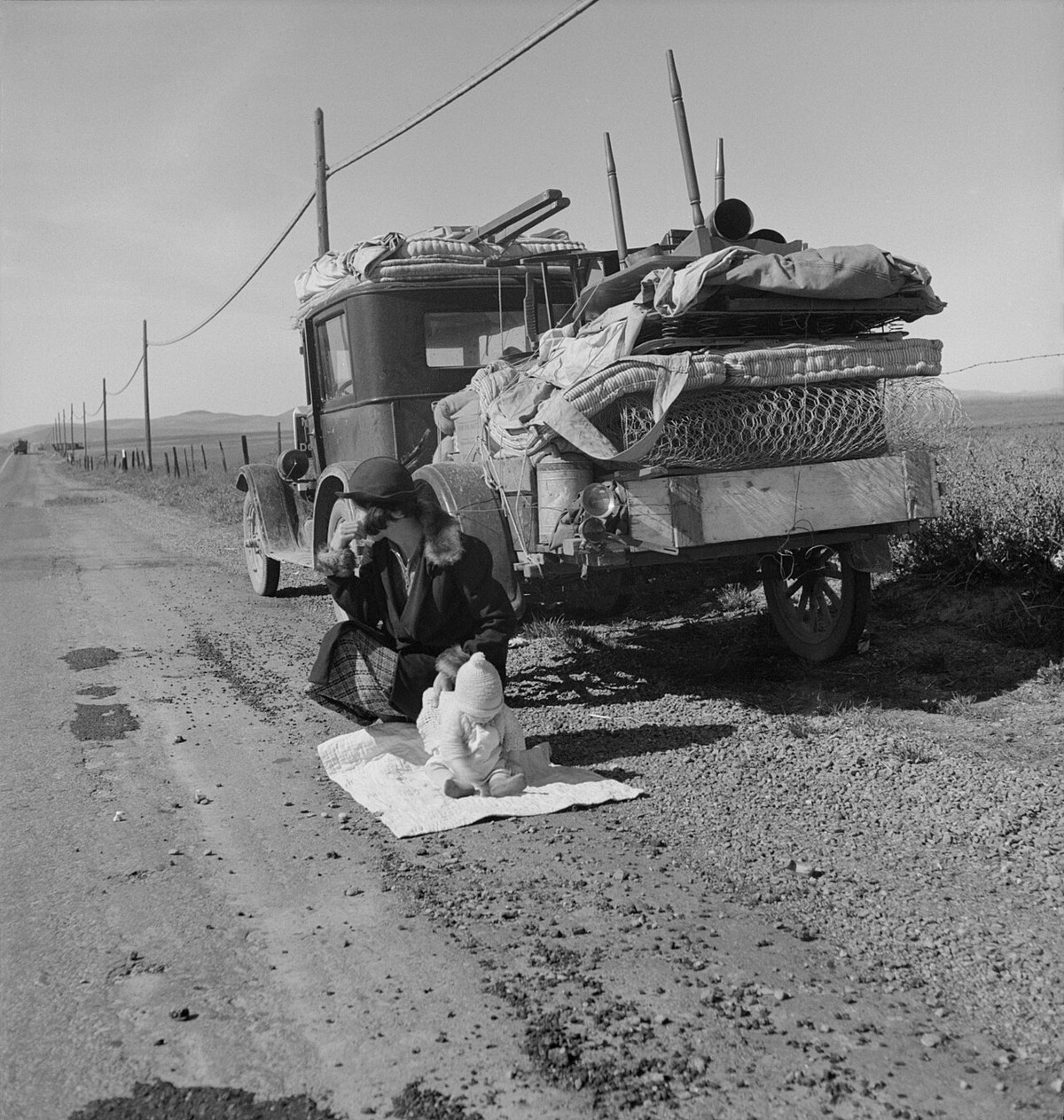
California valleys (Imperial, San Joaquin, Salinas), Yakima, and other belts. Lange’s freights and bindle captions document the road into these jobs.
Logging & timber
Northwest and lake states camps. Short contracts; jungle camps near rail spurs.
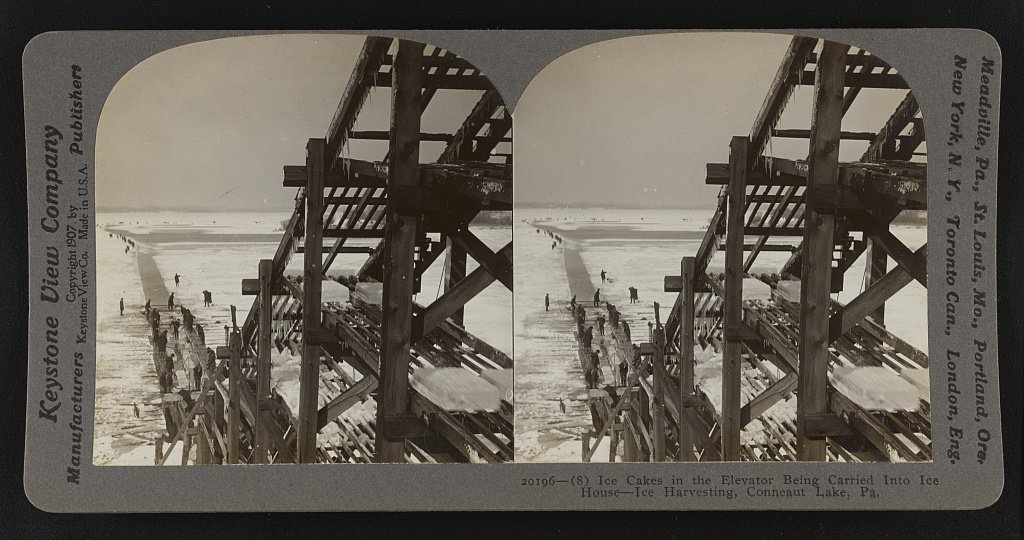
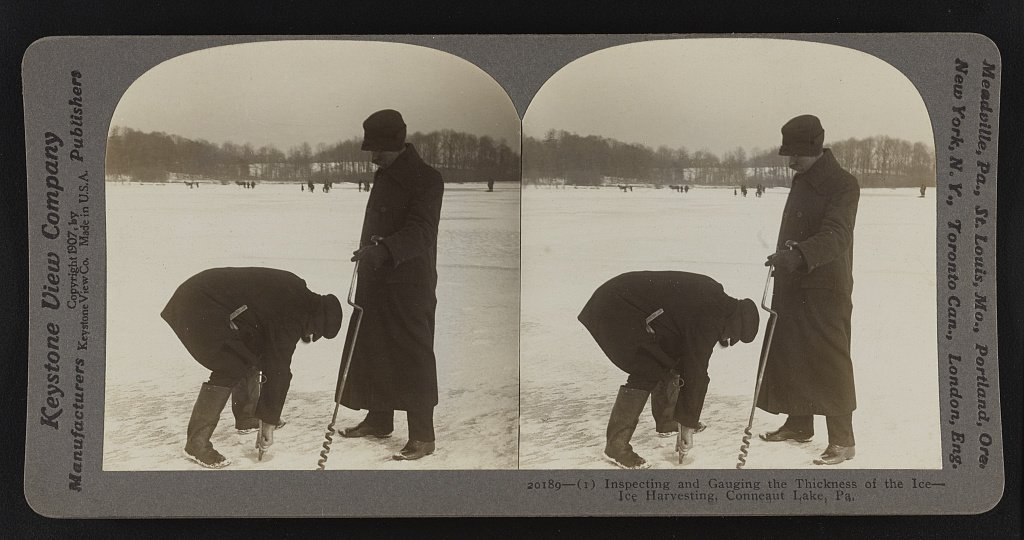
Ice harvesting
Winter lakes and rivers—blocks cut, floated, elevated into icehouses for summer cities. Pre-mechanical refrigeration demand pulled seasonal crews.
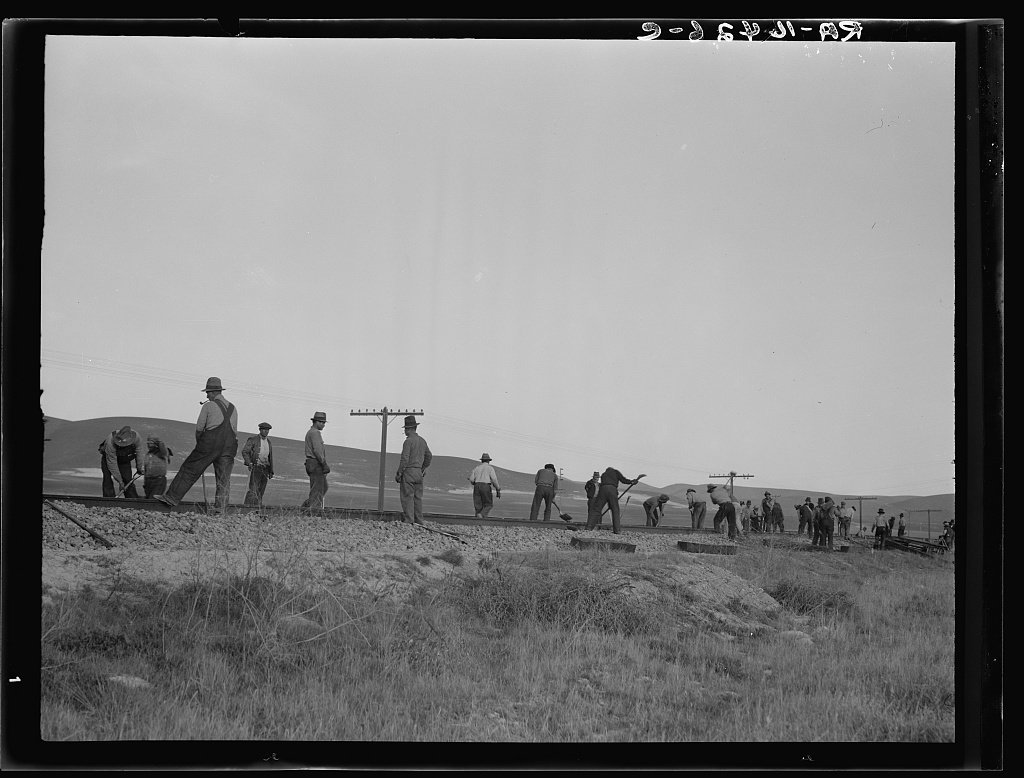
Railroad section gangs
Track maintenance: ties, ballast, rails. Lange photographed a white section gang near King City, California, noting that before the Depression the work had been done entirely by Mexican labor—a reminder that race and immigration shaped who got which jobs.
Construction & odd jobs
Bridge gangs, graders, city day labor. Between contracts: dishwashing, woodcutting, handbills—anything for meals.
Map labeled approximate. Scholarship: Higbie, Indispensable Outcasts; Hall, Harvest Wobblies; UW IWW History Project.
Crafts Between Jobs
When the crop ended, skill still paid. Nickel carving (see the Art and trade room) turned five cents of metal into trade goods; Bo Hughes learned from Bert Wiegand. Tramp-art woodwork advertised a carpenter’s hand. Tinkering, tinsmithing, umbrella repair, and sign painting appear in period tramp ethnographies. Jungle cooks stretched groceries for a whole camp—unpaid work that still followed craft rules.
Why the Circuits Still Matter
Enough people followed these routes to build slang, unions, and a photographic record. The IWW’s harvest organizing, the employment tickets on the main stem, and Lange’s bindle captions all point to the same fact: the American hobo was defined as much by seasons of work as by nights on a freight. Without the circuits, the road collapses back into a cartoon of pure wandering.
That closes The Road wing. The next corridor turns from routes and wages to the people who rode them—notable figures, women on the rails, Black travelers under Jim Crow, and the boxcar kids.
See Sources for works and archives cited in this room.