
The same grab iron that meant freedom in 1915 can mean amputation or a federal trespass case in 2026. History without a warning becomes an advertisement.
Britt keeps memory under a roof. This last room keeps it honest. The museum documents a culture; it does not teach anyone to board trains. Then was deadly. Now remains illegal and deadly. If the tour ends only in wanting to “ride the rails like the old days,” the walk has failed.
Then
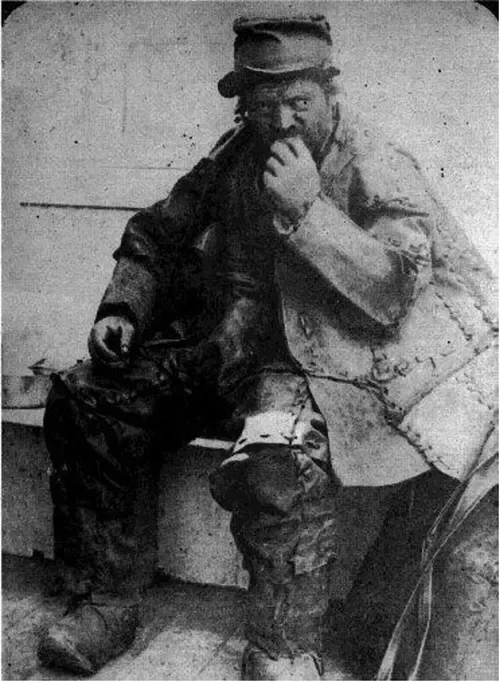
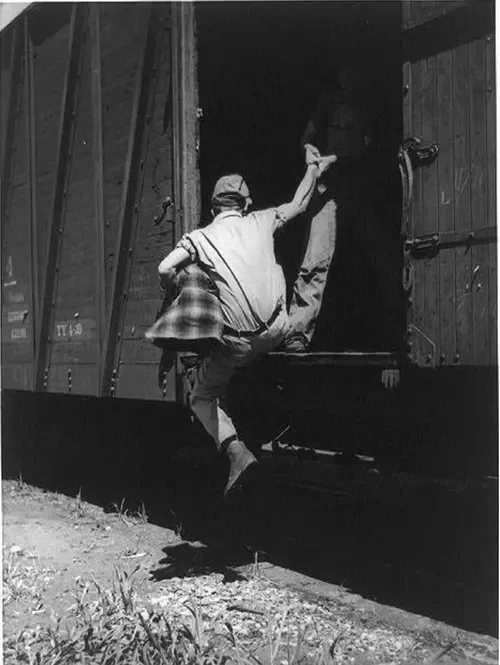
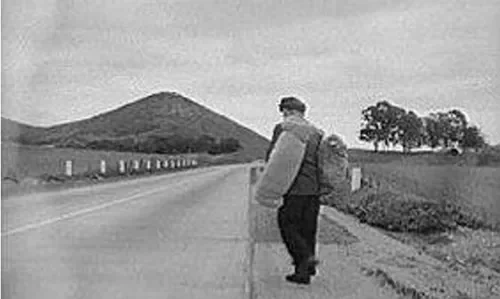
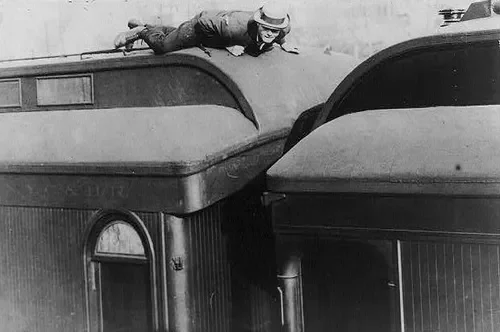
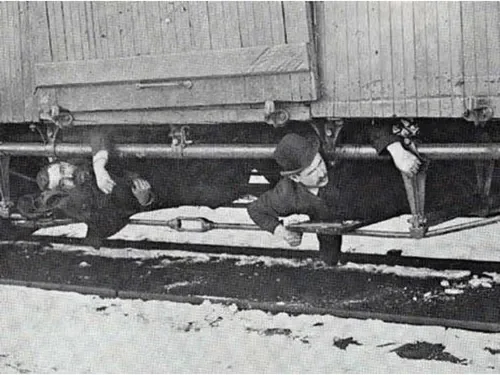
Riders lost limbs and lives to wheels, weather, and violence. W. H. Davies’s amputation, Jack London’s near-misses, and period claim-agent tallies all say the same thing: freights were workplaces without safeguards for trespassers. Period illustrations of conductors forcing riders off trains and Pinkerton-era special agents belong beside those memoirs. The warning is as old as the road.
Now
Modern cars, speeds, and security differ from steam-era practice. Railroad trespass is illegal. FRA trespasser casualty statistics describe general trespass—not a hobo census. Do not cite them as one. Dieselization and tighter security after mid-century made classic freighthopping harder even before legal risk is counted. Curiosity belongs in the gallery, not the yard.
Two Centuries of Warning
Period boarding photographs, Davies’s lost foot, FRA trespass tables—the warning is old and new. If visitors leave knowing names, songs, laws, photographs, and why trespass kills, the museum has preserved something worth keeping. That is the last taste of the route.
You have finished the tour route. The exhibit map will take you anywhere again; the sources shelf will show where every claim sits.
See Sources for works and archives cited in this room.