A smoking cowboy in chalk slides by on a boxcar. Someone asks who drew it. The answer, if there is one, is a tradition—not a single midnight genius.
The last room separated tourist “code” charts from real marks. This chapter gathers what is solid: monikers as identity, date, and direction written on steel—and sends the fake charts back to the gift shop.
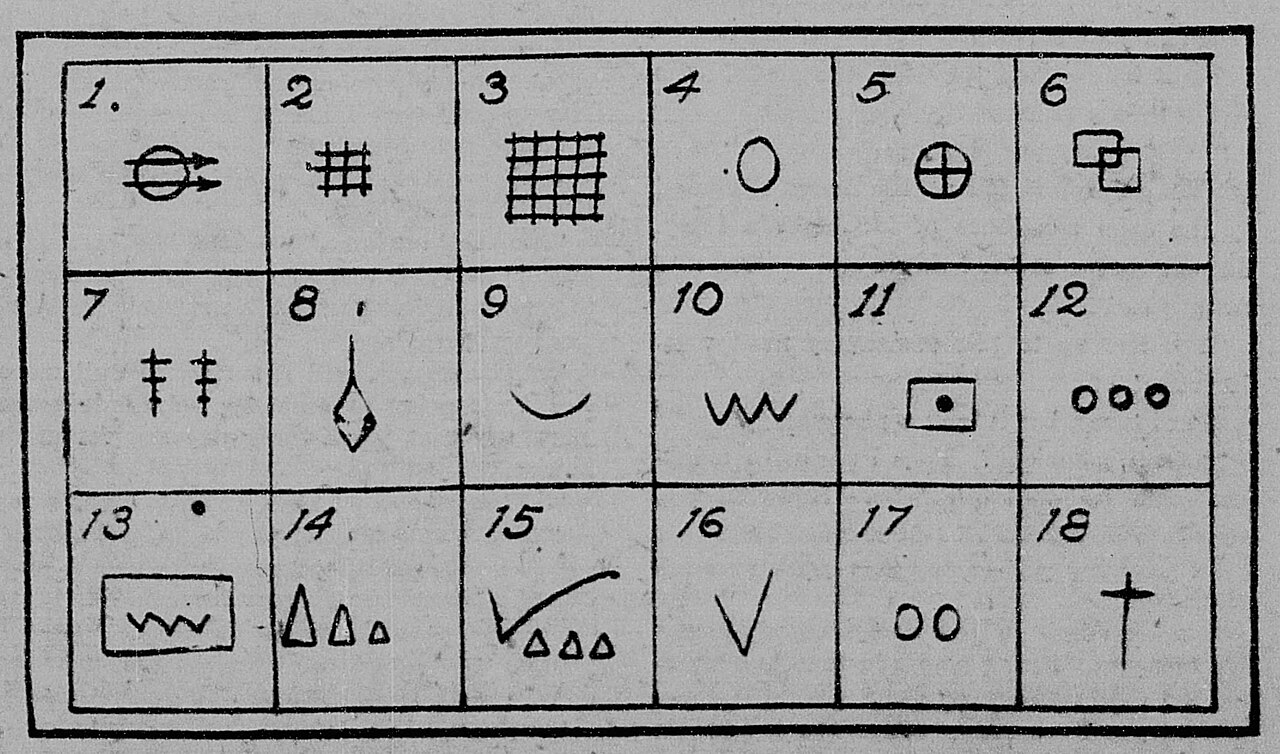
Beggar signs chart, France, 1921. European “crook” or beggar-sign charts show how pictogram folklore traveled internationally—useful context, not proof of U.S. hobo code. Wikimedia Commons (public domain). Source.
Water-tank directories
London’s The Road describes monikers on tanks as a traveler’s register across continents.
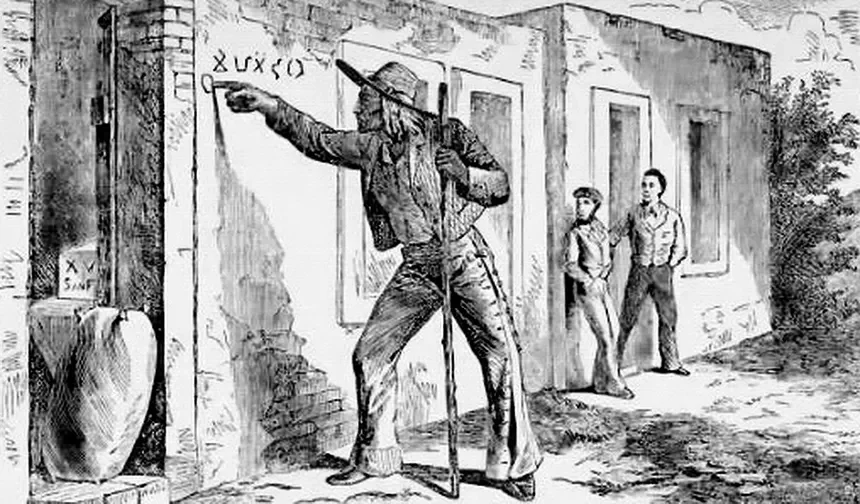
Bozo Texino
Bill Daniel’s film traces the smoking-cowboy mark; J.H. McKinley is among identified hands. Folk art evolves; beware single-inventor myths.
Road names
“Frisco Jack,” kings and queens at Britt—names that worked like signatures in camps.
Not the chart
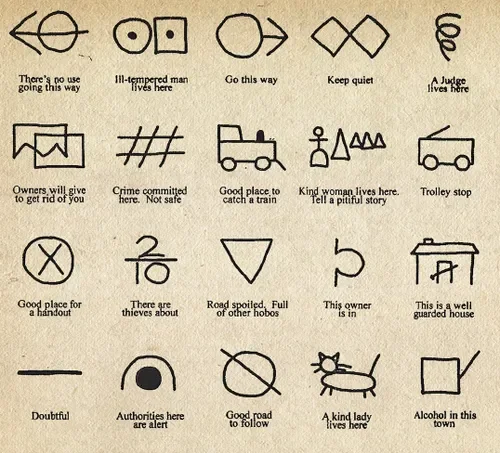
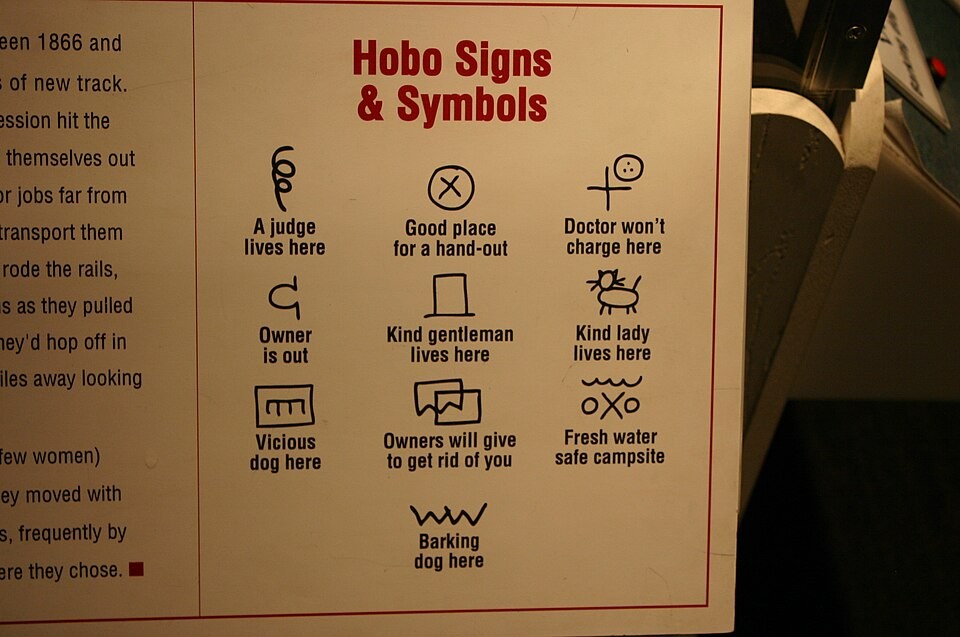
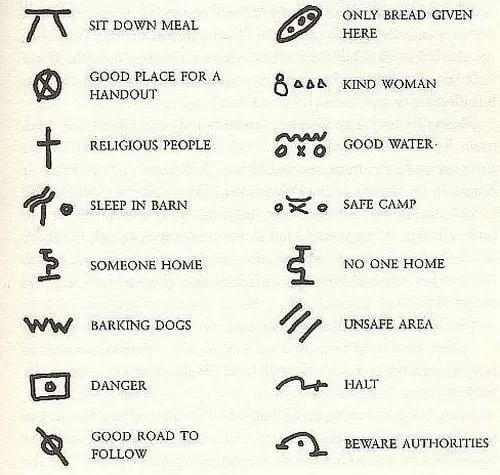
Tourist pictogram sheets are mostly folklore. See Signs and symbols.
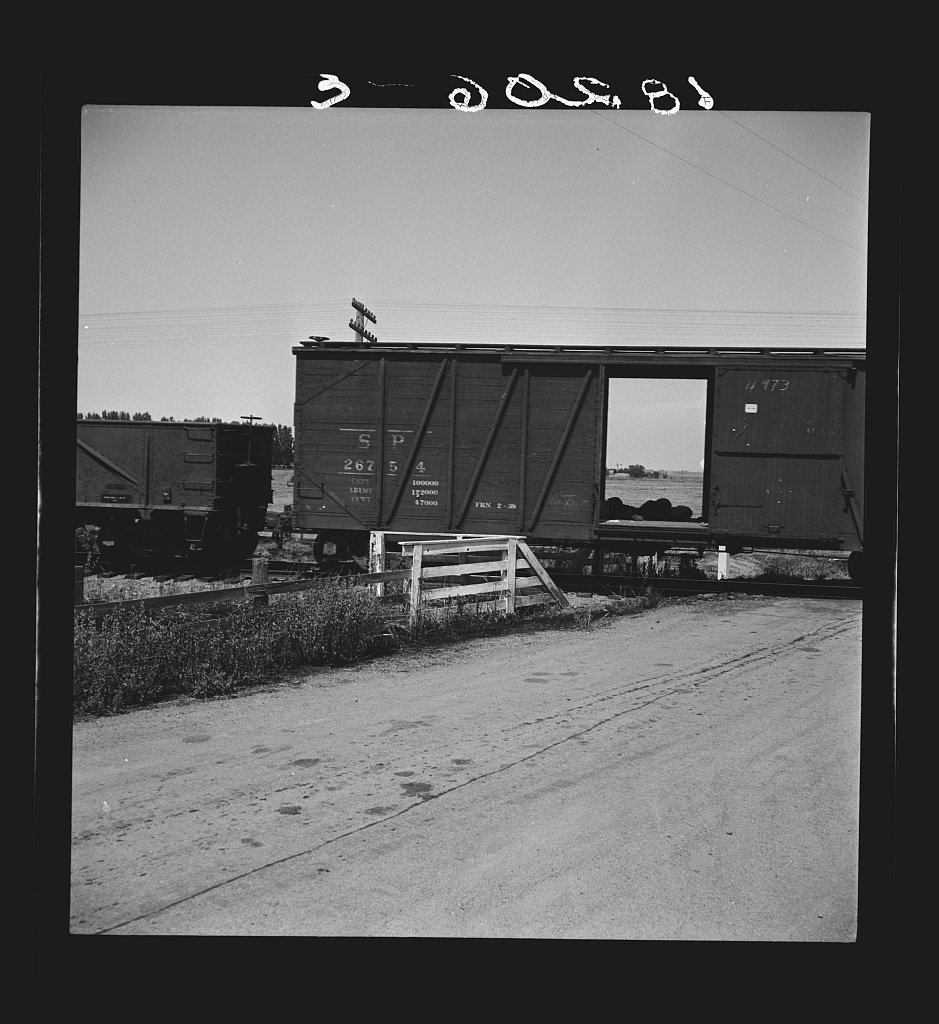
Itinerant laborers on a San Joaquin Valley freight. West-side harvest traffic—the steel surface monikers rode when the car moved. Library of Congress, FSA/OWI Collection. Source.
RightsBozo Texino image: CC BY 3.0 — credit per Commons file page.
A Wall That Teaches Looking
Stand here the way you would before a freight: read names, dates, styles. The wall is incomplete on purpose—most marks never got photographed. What we have is enough to prove the art was real. The folklore charts below stay labeled as folklore so the eye learns the difference.
Hobo signs chart (folklore panel). Popular pictogram charts circulate widely; many lack strong field documentation—treat as folklore unless tied to a place. Research-set photograph of a signs chart. See Signs and symbols.
The Name That Outlived the Car
Cars are scrapped; photographs and films remain. Bozo Texino’s cowboy head survived because riders repeated it and documentarians chased it. That is preservation as practice—copying a mark until the culture can still see it.
Freight graffiti / moniker marks. Paint and chalk names on steel are better documented than cute tourist “code” sheets. Research-set photograph.Museum panel of folkloric hobo signs. Popular “hobo code” charts circulate widely; label them folklore unless tied to a place. Photograph of a museum interpretive panel.Depression-era “hobo code” chart. Charts like this shaped popular belief; historians urge caution about how often such marks were actually used. Research-set image of a folklore chart. See Signs and symbols.
Names on steel need words in the mouth. The next room turns to the slang that traveled with those monikers.
See Sources for works and archives cited in this room.